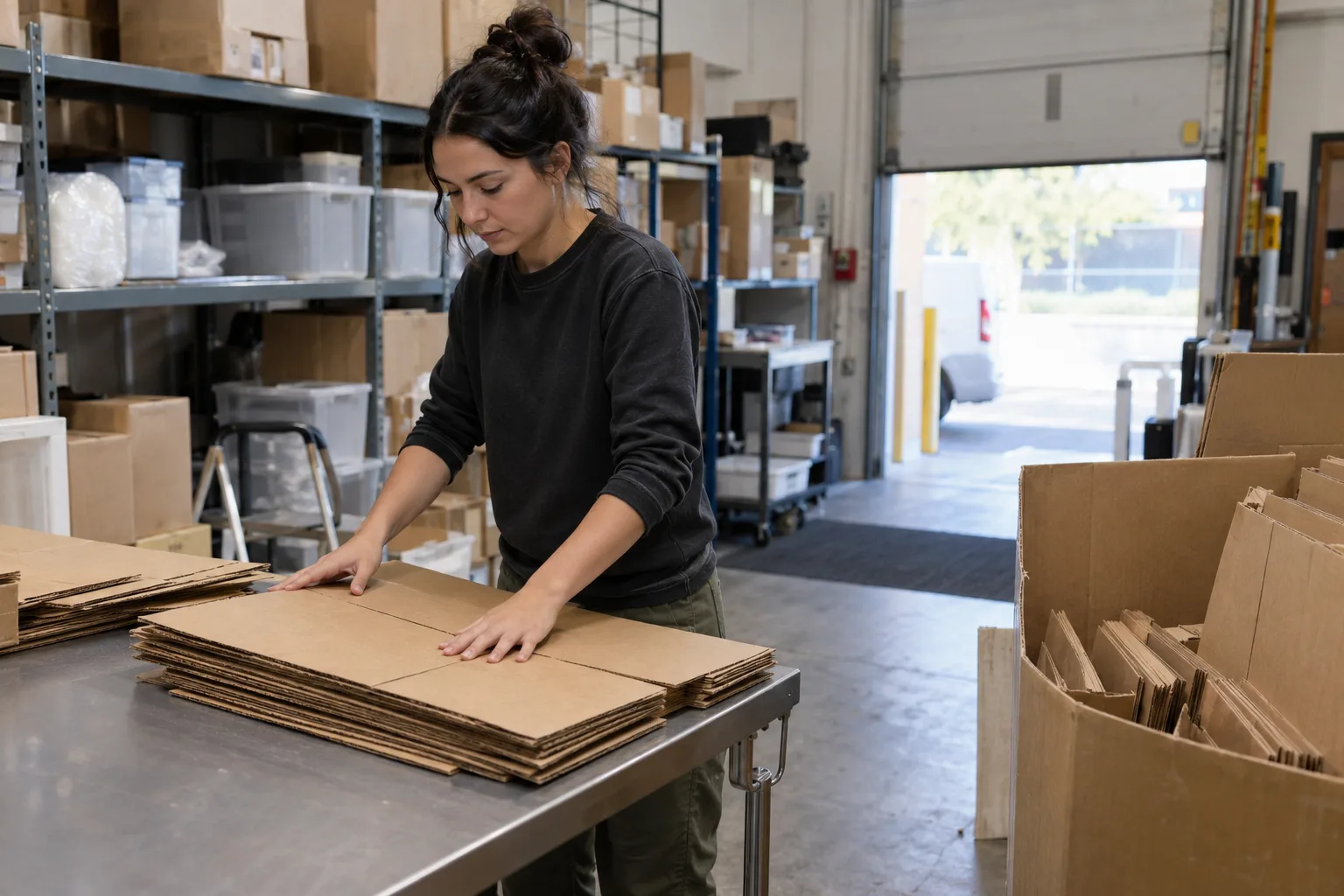
How to Start a Cardboard Recycling Routine at Your Business
Build a simple routine around source separation, dry storage, staff cues, and pickup timing.
Bakersfield, California
Clear pickup planning for moving boxes, delivery cartons, retail stockrooms, warehouse OCC, and event packaging.
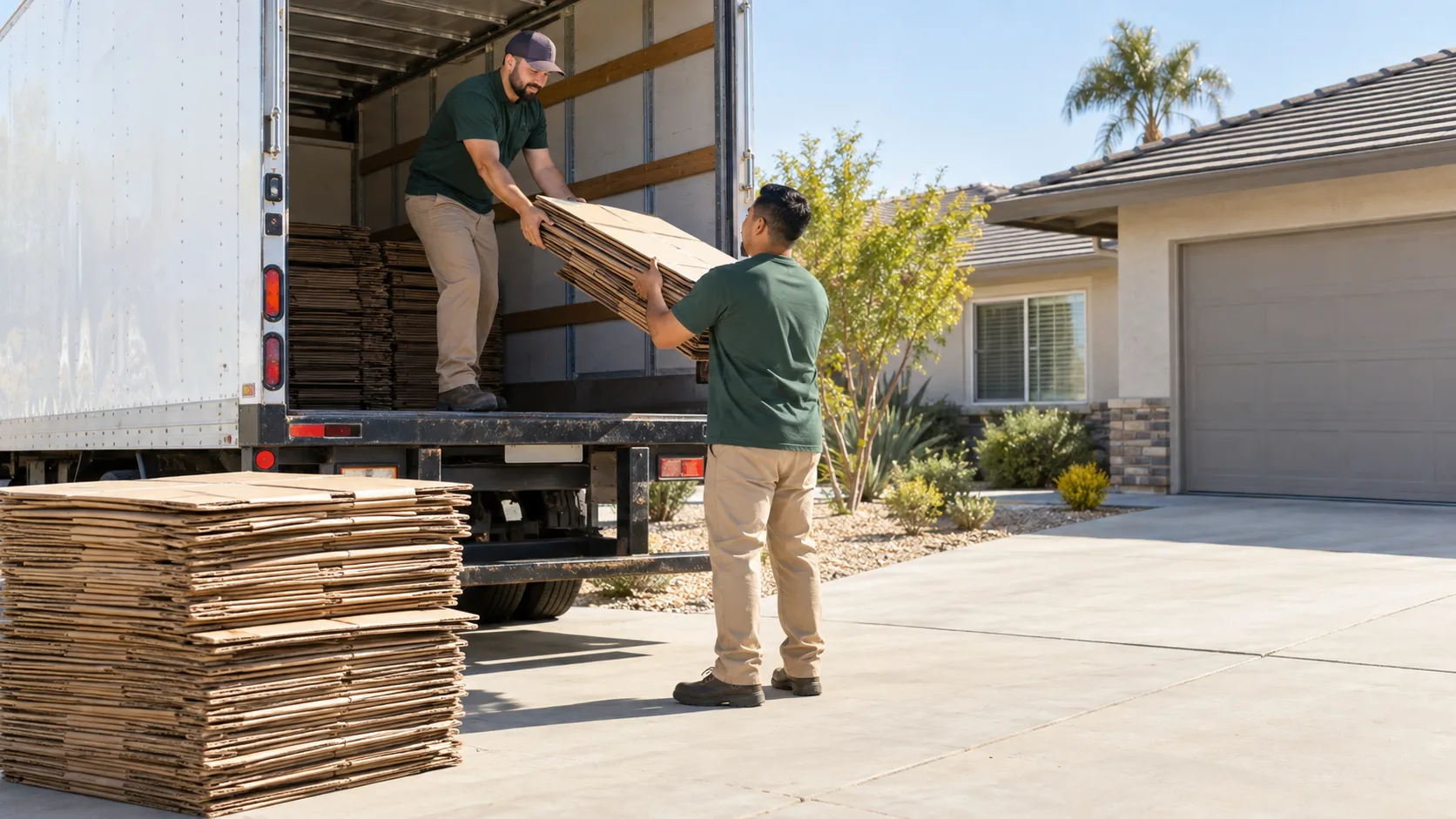
 From pile to pickupScope · stage · collect
One material, fewer mysteries. Start with what you have, where it sits, and how a crew can reach it.
A garage after a move is not the same job as a warehouse dock. The cardboard may be loose, flattened, bundled, or baled. Access can mean a short driveway, a second-floor carry, a service alley, or a scheduled dock appointment.
TidyWay’s service pages help you sort the material, describe the access, and understand what can change the scope before pickup day.
The useful details fit on one packing slip: material, volume, condition, access, and timing.
Keep corrugated cardboard separate from food, liquids, foam, film plastic, and trash.
Share photographs, rough dimensions, box counts, or bale counts without pretending they are exact weights.
Note gates, stairs, elevators, alleys, loading docks, parking limits, and the carry distance.
Scope, timing, material acceptance, and price should be agreed before work begins.
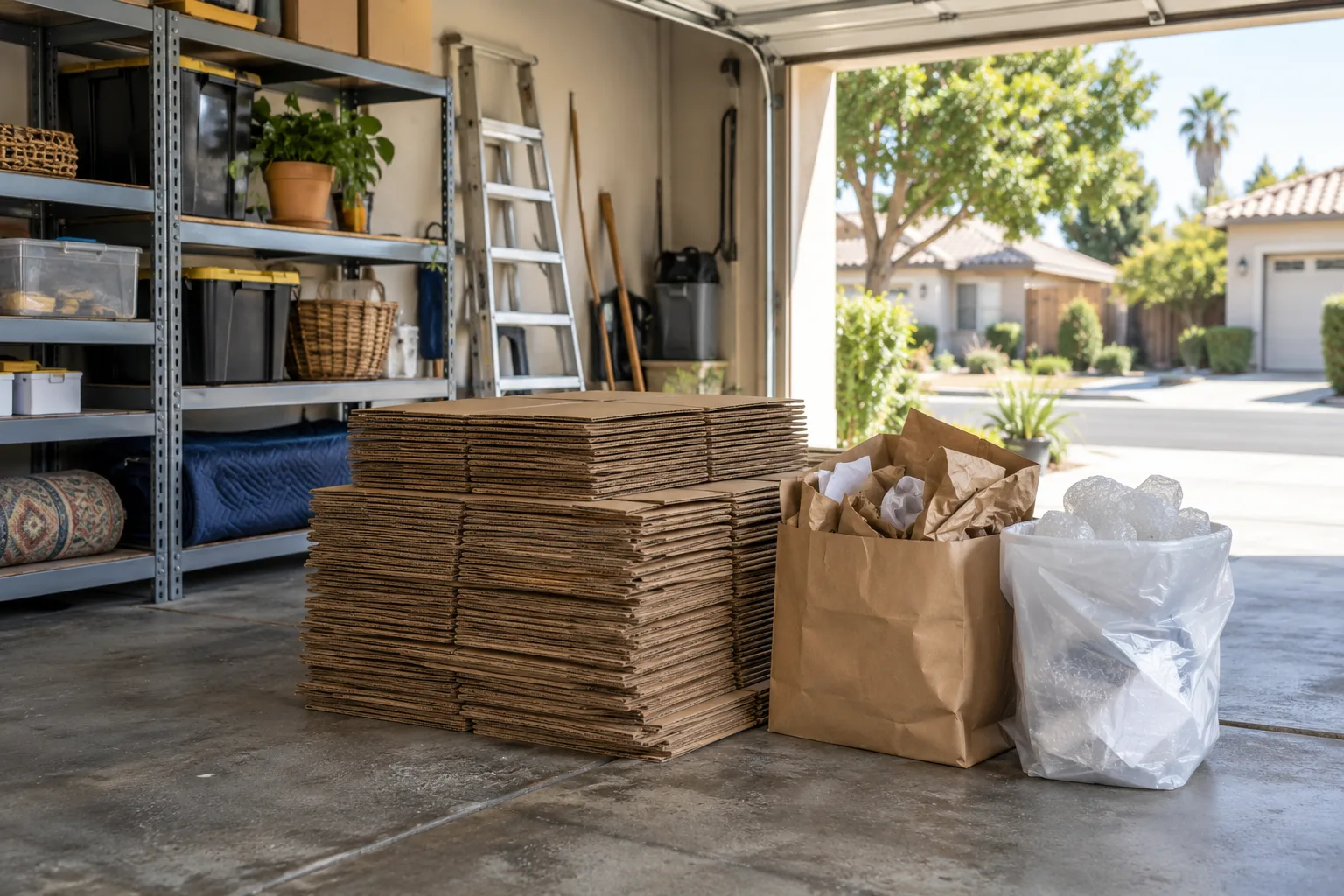

CalRecycle guidance says cardboard in traditional recycling should be dry and free of debris. Local acceptance still varies, especially for coated or food-soiled packaging.
Browse the field guidesExplore practical pickup considerations for ten communities close to Bakersfield. Verify availability for your exact address.
Build a simple routine around source separation, dry storage, staff cues, and pickup timing.
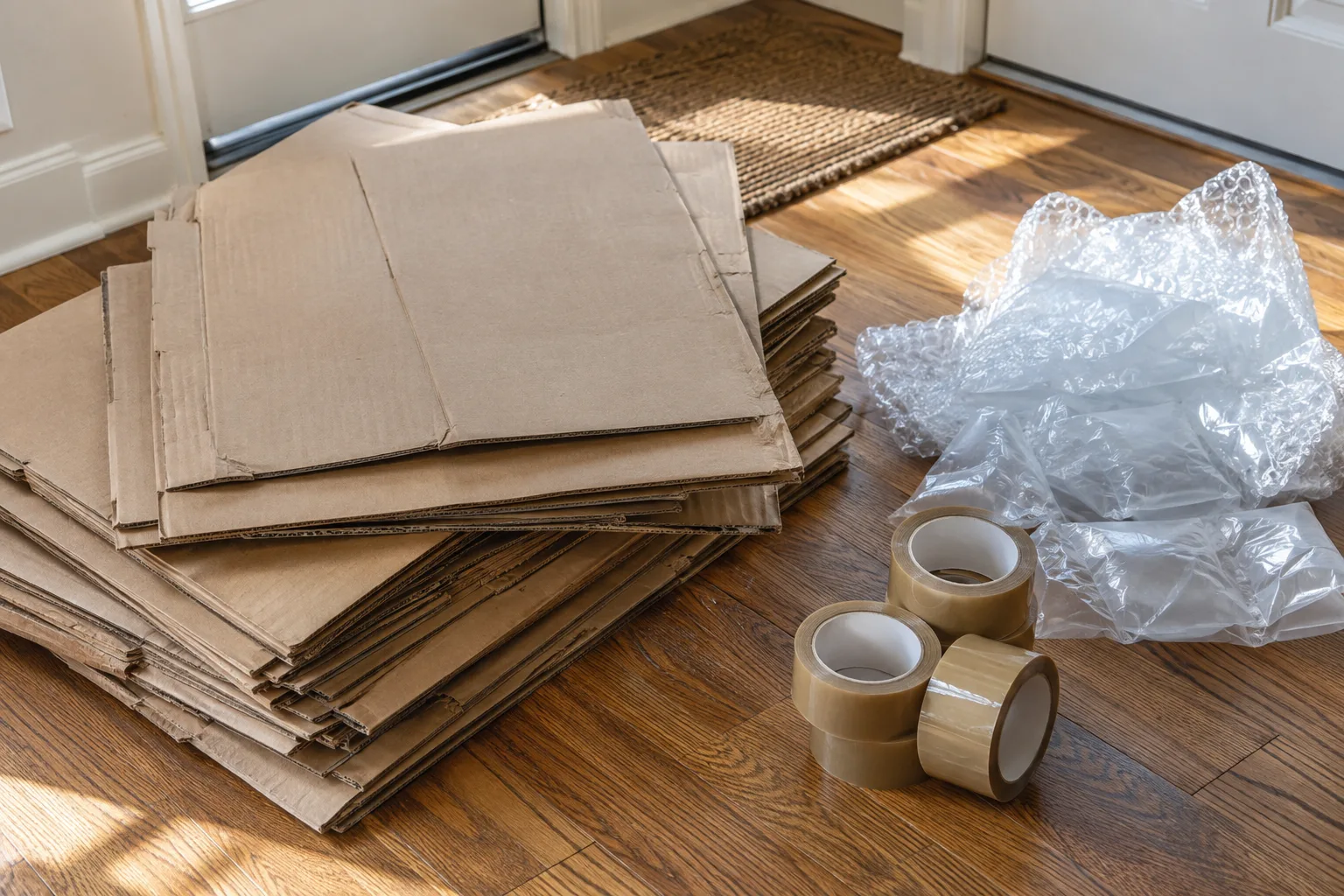
Check every carton, choose what to reuse, and separate packing materials before the boxes leave.
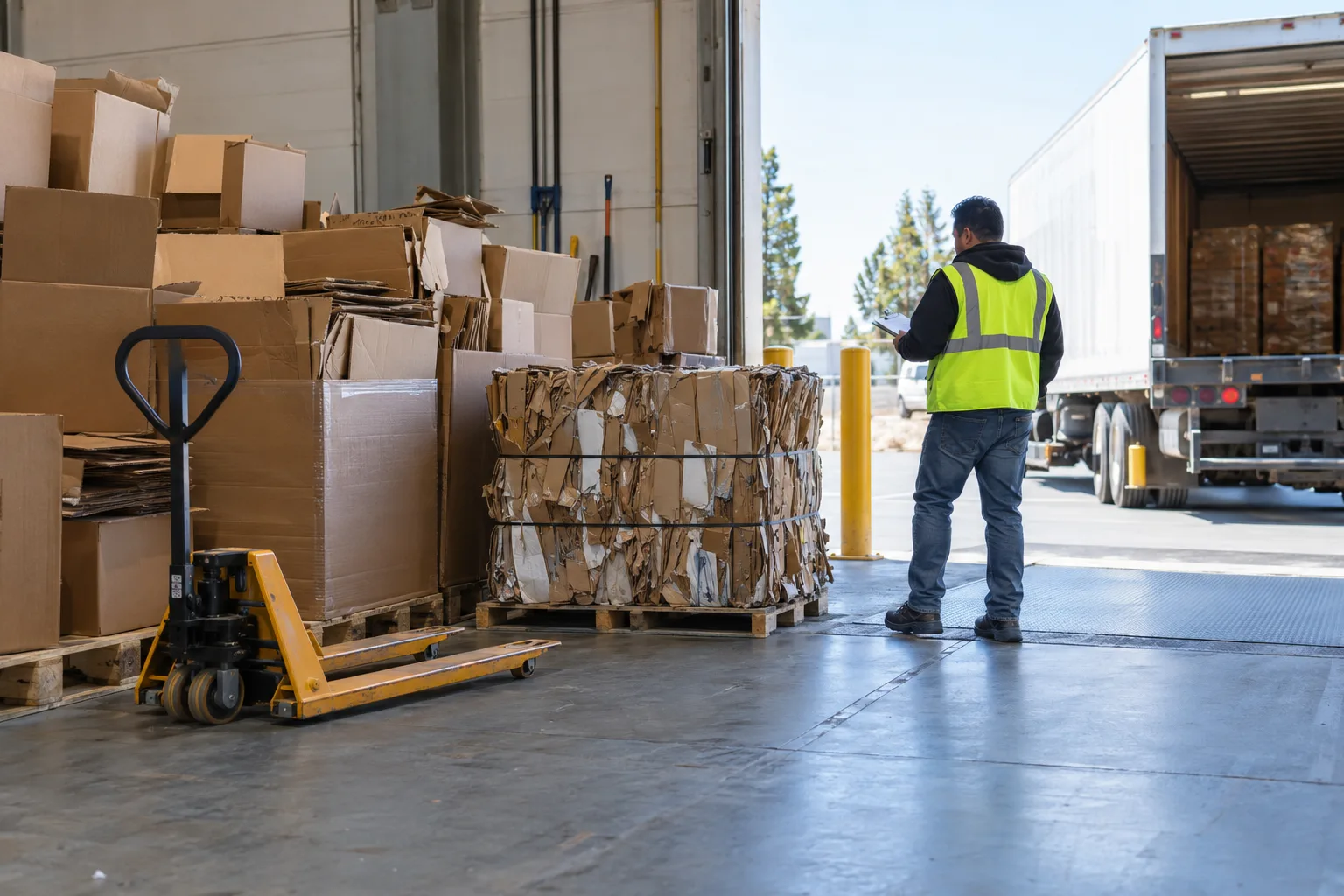
Prepare an OCC pickup without blocking dock traffic or mixing recoverable cardboard with film and trash.
Bring the volume, material condition, location, and access details. That is enough to start a useful conversation.