
Map where boxes appear
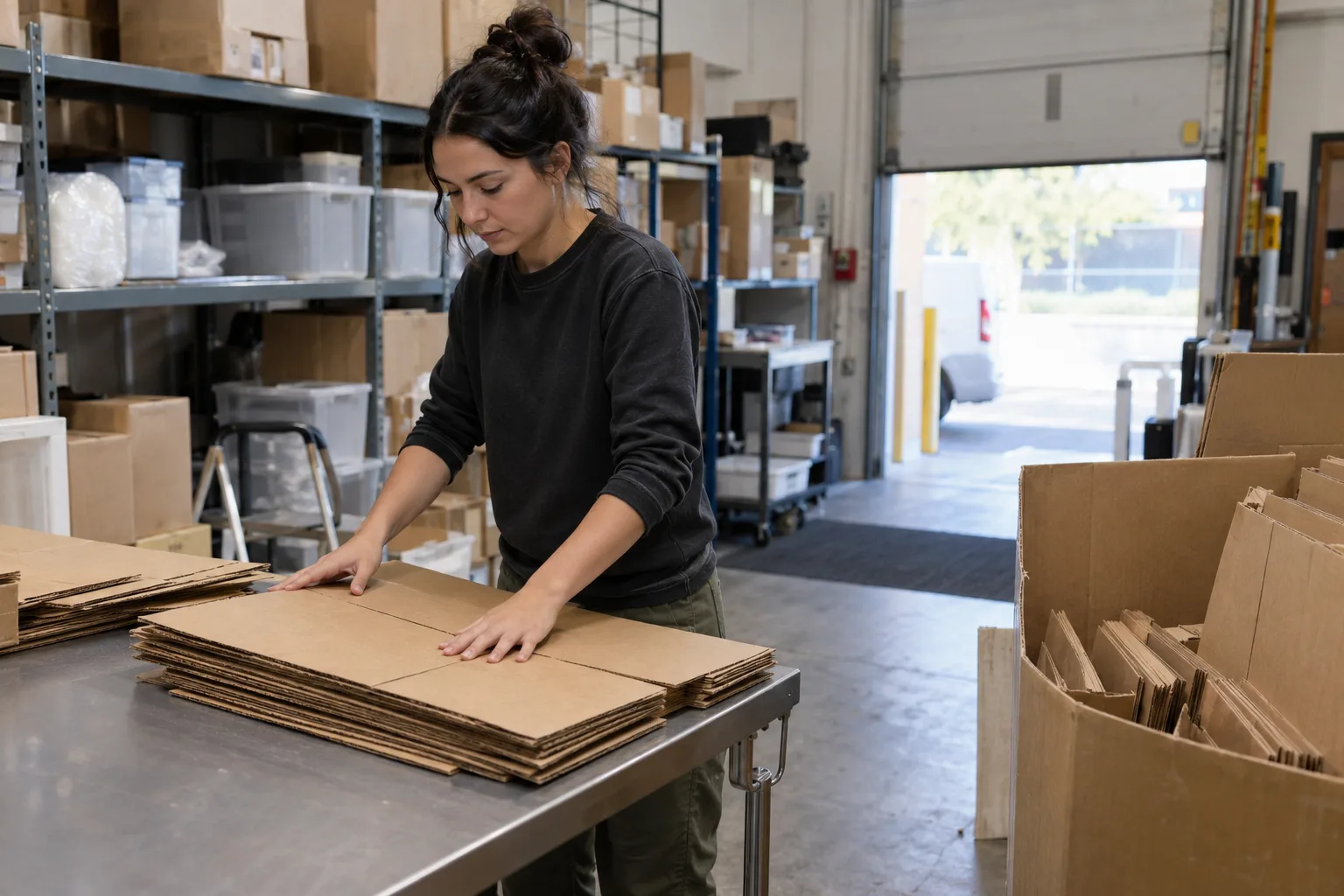
Walk the receiving, stockroom, office-supply, and shipping areas for one normal week. Note where cartons are opened, how quickly they accumulate, and where workers already move them. The best collection point sits close enough to the work to be used but does not narrow an aisle, exit, or loading route.
Separate at the point of use
Give cardboard its own clearly understood staging area. Keep stretch film, foam, strapping, trash, and food waste in different containers. A short staff note should name what belongs there and who handles a questionable item. Source separation is easier than sorting a mixed pile after the fact.
Protect material from weather and food residue
Store boxes indoors or under cover. CalRecycle guidance says clean paper and cardboard in traditional recycling should be dry and free of debris. Retail food operations need particular care because food residue and coated packaging can change the correct waste stream.
Choose a pickup trigger
Use a visible trigger that fits the site: a marked wall height, a set pallet count, a weekly review, or a scheduled collection. Record loose volume, flattened volume, or bale count consistently. The record helps you compare service options without pretending a rough pile estimate is an exact weight.
Review the routine after busy periods
Seasonal deliveries and store resets can overwhelm a system that works in an average week. After a peak period, check whether the staging zone stayed usable, contamination increased, or pickups arrived too late. Adjust the trigger and staff instructions before the next surge.
Use this checklist
- Identify generation points
- Choose a dry staging area
- Separate film and trash
- Post plain-language sorting cues
- Set a pickup trigger
- Review after seasonal peaks
Related service
Commercial Cardboard Recycling
Cardboard collection planning for offices, shops, property teams, and other business sites.
View the service